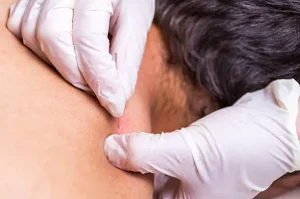
What Is Dry Needling? Understanding How It May Help Relieve Muscle Tension and Pain
Muscle tightness, recurring knots, and persistent aches can make everyday activities and your motivation suffer. Whether you experience neck tension from sitting at a computer, tight shoulders from stress, or lingering muscle discomfort after exercise, finding the right approach to treatment can make a difference.
Dry needling is a therapeutic technique used by trained healthcare professionals to address certain types of muscle pain, tension, and movement limitations. It involves inserting a thin, sterile needle into specific areas of muscle, often called trigger points, with the goal of reducing pain and improving muscle function.
But what exactly is dry needling, how does it work, and how is it different from acupuncture? Understanding the technique can help you decide whether it may be right for you.
What Is Dry Needling?
Dry needling is a technique that uses thin, solid needles to stimulate targeted muscles and surrounding tissues. It is commonly used to address myofascial pain, which involves discomfort associated with muscles and their connective tissues.
Practitioners usually target trigger points—sensitive areas within a muscle that can be associated with tenderness, restricted movement, or pain that radiates into nearby areas. These points are sometimes described as muscle knots.
Unlike an injection, dry needling does not involve injecting medication or another substance into the body. The needle itself provides the stimulus.
Depending on the treatment approach and the individual’s needs, a practitioner may insert the needle briefly or use specific techniques intended to stimulate the targeted tissue.
How Does Dry Needling Work?
Muscle pain and tension can develop for many reasons, including repetitive movements, physical overexertion, injury, prolonged postures, and protective muscle guarding.
Dry needling is thought to influence pain signaling and the response of targeted muscle tissue. In some people, it may help reduce pain sensitivity, ease muscle tension, and improve the ability to move comfortably.
Researchers continue to study the mechanisms behind dry needling, and which patients are most likely to benefit. Evidence suggests it may provide short-term improvements in pain and function for some musculoskeletal conditions, although results vary and it is not effective for everyone.
Dry needling is often most useful as part of a broader treatment plan that may also include movement exercises, rehabilitation, manual therapy, and changes to activities that contribute to recurring discomfort.
What Conditions May Benefit From Dry Needling?
A healthcare professional may consider dry needling for certain muscle-related conditions, depending on the individual’s symptoms, medical history, and examination findings.
These may include:
- Neck and shoulder tension: Muscle discomfort associated with prolonged sitting, repetitive activity, or sustained postures.
- Back pain: Certain types of muscular discomfort affecting the upper or lower back.
- Muscle trigger points: Localized areas of tenderness or sensitivity that may restrict comfortable movement.
- Sports-related muscle discomfort: Muscle tightness or pain associated with training, activity, or recovery.
- Limited mobility: Muscle-related restrictions that make everyday movement or exercise uncomfortable.
- Headaches associated with muscle tension: In some cases, treatment may be considered for muscular contributors to headache symptoms.
Dry needling is not appropriate for every type of pain, and improvement depends on the underlying cause. Persistent, severe, unexplained, or worsening symptoms deserve an appropriate medical evaluation rather than treatment of muscle tension alone.
What Is the Difference Between Dry Needling and Acupuncture?
Although dry needling and acupuncture both use thin needles, they are distinct practices with different training traditions and treatment frameworks.
Dry needling generally focuses on musculoskeletal assessment and the stimulation of specific muscles or trigger points. Practitioners use it as one tool to address certain types of pain, muscle dysfunction, and movement limitations.
Acupuncture is rooted in traditional Chinese medicine, which uses a broader system of assessment and treatment involving acupuncture points and traditional concepts of health and balance. Acupuncture is also used in a range of modern clinical settings for pain management and other concerns.
There can be overlap in the physical techniques, but the two approaches are not interchangeable. Training, professional scope, treatment goals, and the regulations governing who may perform each technique vary by location.
The best choice depends on your concerns, the qualifications of the practitioner, and the type of care you are seeking.
Does Dry Needling Hurt?
Experiences vary from person to person. Some people feel little more than a brief pinch or pressure when the needle is inserted. Others experience a temporary muscle twitch, cramping sensation, or familiar ache when a sensitive area is stimulated.
It is common to have temporary muscle soreness after treatment, similar to the feeling after exercise. Mild bruising or small amounts of bleeding can also occur.
More serious complications are uncommon but possible. These include infection, nerve or tissue injury, and—in certain areas of the upper back and chest—a rare but potentially serious collapsed lung called a pneumothorax.
For this reason, dry needling should only be performed by a properly trained professional who is authorized to provide it, uses sterile, single-use needles, and understands the relevant anatomy and safety precautions. Your practitioner should explain the procedure, discuss potential risks, and obtain your informed consent before treatment.
What Happens During a Dry Needling Session?
A session typically begins with a discussion of your symptoms, health history, activity levels, and treatment goals. The practitioner may assess your movement, muscle tenderness, and areas of discomfort to determine whether dry needling is appropriate.
If treatment is recommended, the practitioner cleans the skin and inserts a thin needle into selected areas. The needle may remain in place briefly or be moved using a specific technique, depending on the treatment approach.
You may feel a small twitch or temporary muscle ache, but you should be able to communicate throughout the session. Let your practitioner know if you experience significant pain, dizziness, unusual sensations, or discomfort that concerns you.
After treatment, your practitioner may recommend gentle movement, hydration, or specific exercises. The number of sessions needed varies according to the condition being treated and your response. Dry needling should not be viewed as a stand-alone solution when contributing movement patterns, strength deficits, or other underlying factors also need attention.
How Dry Needling Can Fit Into a Whole-Person Approach to Wellness
Muscle discomfort rarely exists in isolation. Work habits, physical activity, recovery, stress, sleep, and movement patterns can all influence how the body feels and functions.
Dry needling may be one component of a personalized approach that also includes chiropractic care, soft tissue therapy, rehabilitation exercises, and practical strategies for maintaining mobility and strength.
For example, reducing muscle discomfort may make it easier for someone to participate in exercises that support better movement and function. Addressing the factors that contribute to recurring tension can also be important for longer-term progress.
The goal is not simply to release a tight muscle, but to understand what may be contributing to the problem and help the individual move with greater comfort and confidence.
Is Dry Needling Right for You?
If recurring muscle tightness, localized pain, or movement limitations are interfering with your daily life, a qualified healthcare professional can help determine whether dry needling is an appropriate option.
It may be worth discussing if you have tried other approaches and continue to experience muscle-related discomfort. However, it is not suitable for everyone. Your practitioner should review relevant medical conditions, medications, bleeding risks, pregnancy considerations, and other factors before recommending treatment.
Dry needling works best when the treatment plan is tailored to the individual rather than applied as a one-size-fits-all solution.
Explore Chiropractic Care at Soul Wellness
At Soul Wellness in Mooresville, NC, Dr. Cole Munson offers chiropractic care, dry needling, soft tissue therapy, and rehabilitation exercises to help patients address pain, restore function, and move with greater confidence.
If you are interested in learning whether dry needling may be appropriate for your needs, a consultation can help you better understand your options and determine a treatment approach suited to your goals.
Explore Dr. Cole Munson’s provider profile to learn more about chiropractic care and dry needling at Soul Wellness.